
A Plethora of B Vitamins for Overall Health
Cells of the human body depend on the water-soluble B vitamins for energy production and cell maintenance. As you age, your ability to absorb adequate amounts of B vitamins from food diminishes. Additionally, taking certain medications and drinking alcohol or caffeinated beverages can put you at risk for vitamin B deficiencies.
B-100 Complex provides, in two convenient capsules, a full range of B vitamins, including vitamin B1 (thiamine), B2 (riboflavin), B3 (niacin), B5 (pantothenic acid), B6 (pyridoxine), B12 (methylcobalamin), folic acid, and biotin.
Many B vitamins work synergistically, making it beneficial to take the entire B complex together. Still, each B vitamin performs unique functions in the body and merits a review separately.
B1 (Thiamine)
Thiamine -- which is found in wheat germ, whole wheat, peas, beans, fish, peanuts and meat -- helps your body's cells convert carbohydrates into energy. B1 promotes healthy blood insulin levels and supports the vascular system. Thiamine is also essential for the functioning of the heart and for healthy nerve cells, including those in the brain. In this instance, thiamine acts as a coenzyme in the production of the neurotransmitter (chemical messenger between nerve fibers), acetylcholine.
A large-scale population-based study found high dietary intake of thiamine (plus riboflavin and niacin) was associated with eye health.
B2 (Riboflavin)
Riboflavin is found in dairy, eggs, meat, leafy green vegetables and whole grains. Riboflavin works with the other B vitamins and activates B6 and folic acid. It is important for red blood cell production and maintenance of the skin, cornea of the eye and nerve sheaths. Similar to thiamine, it helps in releasing energy from carbohydrates, but also proteins and fats. Riboflavin also has some antioxidant effects, similar to niacin.
B3 (Niacin)
Niacin is another vital B vitamin essential for the conversion of carbohydrates to energy. It supports a healthy digestive system, nerves, and skin. Niacin may help maintain healthy cholesterol levels due to its ability to regulate cholesterol synthesis in the liver.
Food sources of B3 include peanuts, fish, coffee, beans, meat, and whole grains. There is some evidence that people who consume higher amounts of niacin from food and multivitamin sources have a higher chance of maintaining healthy brain function.
B5 (Pantothenic Acid)
Pantothenic acid is involved in the Kreb’s cycle for the metabolism of carbohydrates, proteins, and lipids. The body often uses B5 in tandem with biotin and folic acid. Pantothenic acid also appears to be essential to normal epithelial functions.
Maintaining healthy levels of B6 can assist in overall vitality, improved mood, muscle strength cardiovascular and gastrointestinal health. Antibiotics can destroy the beneficial intestinal bacteria which produce B vitamins, pantothenic acid and biotin. B6 is also know to boost immune health.
Salmon, liver, and yeast have the highest levels of B5. Other sources include dairy, eggs, veggies, grains, and meat.
B6 (Pyridoxine)
Vitamin B6 is another critical B-group vitamin, because of the multiple biochemical reactions in which it is involved, including an active role in the immune system and metabolism of amino acids, carbohydrates, and lipids. And, B6 is concentrated in muscle mass.
B6 is found in meat, poultry, fish, eggs, white potatoes, and other starchy vegetables, as well as non-citrus fruits, fortified cereals, and soy products.
Supplemental vitamin B6 may be helpful in promoting comfortable pre menstral cycles, and preliminary evidence indicates that it B6 supports a healthy neurological system and helps to maintain healthy levels of homocysteine.
B12 (Methylcobalamin)
Vitamin B12 is naturally found in animal products. The richest sources are the liver, brain, and kidney; other sources include egg yolks, clams, oysters, crabs, sardines, and salmon. Lower amounts of B12 are found in fish, beef, lamb, pork, chicken, cheese, and milk. Plant products are typically devoid of B12 and it is thought that only bacteria actually manufacture the vitamin. Some fermented plant products, such as tempeh, may have some vitamin B12.
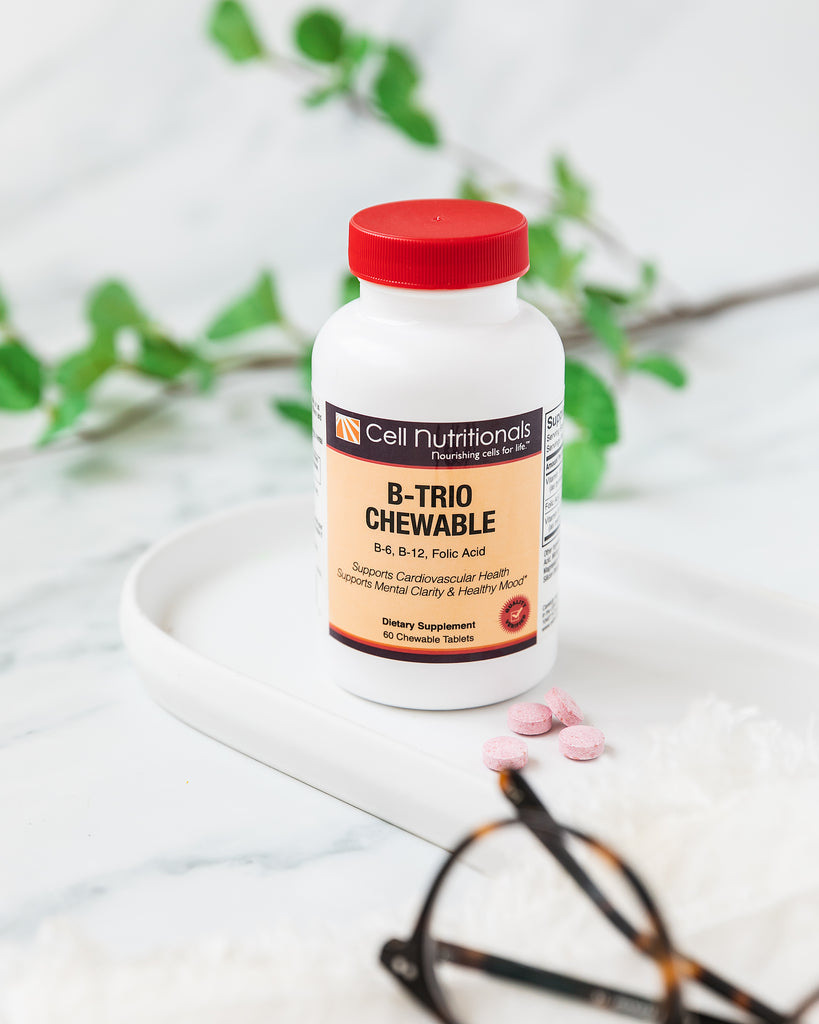
B12 and folate together help convert homocysteines to a heart-healthy element called methionine, which is the precursor of natural SAMe. Appropriate brain levels of SAMe may result in healthy mood balance.
Methylcobalamin is a coenzyme form and a more natural form of B12, which becomes active immediately upon absorption.
Folic Acid (B9)
Only discovered in 1945, folic acid (also known as folate or folacin) is used by the body for intracellular metabolism, DNA synthesis, and conversion of homocysteine to methionine. Folic acid is a member of the B-complex family (B9), and was given its name because it is found in foliage such as dark green leafy vegetables. Other natural sources of folic acid are apricots, avocados, carrots, egg yolks, liver, melons, whole grains, and yeasts. Unfortunately, modern diets tend to be deficient in this essential nutrient, which is why in 1998, U.S. food manufacturers were required to add folic acid fortification to all cold cereal and baking flour products.
Appropriate levels of folic acid has been linked to support of healthy moods, cognitive function and maintaining healthy kidney and liver systems.
Biotin – Another Mighty B-Vitamin!
Biotin is found in beef liver, egg yolk, brewer's yeast, peanuts, cauliflower and mushrooms. And, yes, it's true. Biotin is yet another water soluble B-vitamin. Biotin acts as a handy coenzyme during the metabolism of protein, fats, and carbohydrates and also supports synthesis of hormones and cholesterol, cholesterol which is needed for the functioning of cell membranes, particularly in the brain.
Studies have shown that biotin promotes healthy moods and supports healthy skin, hair and healthy fingernails. Score more points for the basic B-vitamins!
Studies:
Notes:
- Niacin may cause flushing, headache and stomach-ache in some people. The niacin we use for the B-100 is 80% nicinamide. We choose this form because it is not associated with flushing reactions, however, those sensitive to niacin may flush with as little as 30mg per day. Divided doses may be the best for those with sensitivities, as well as taking B-100 with food.
- There is a slight possibility that taking folic acid may mask the symptoms of pernicious anemia (B12 deficiency). However, this can easily be avoided by taking a B12 supplement along with folic acid, and this is why you so often find these two supplements mentioned together