Calcium -- No Surprise, It's Important For Bone Formation & Strength
We all know from grade school that calcium helps strengthen bones. The mantra was always to enjoy milk products -- or collard greens, Chinese cabbage, mustard greens, broccoli, bok choy, tofu, sardines with bones, fortified orange juice, etc. -- because they keep your bones strong! In fact, 99% of the body's calcium is found in bone and teeth.
Calcium -- Playing A Much Bigger Role In Health!
Calcium is an essential mineral for nerve transmission, muscle contraction, vascular contraction, vasodilation, glandular secretion, cell membrane and capillary permeability, enzyme reactions, respiration, renal function, blood coagulation, hormone release and storage, the production of energy and the maintenance of immune functions.
A number of studies indicate that calcium supports colorectal health and healthy blood pressure levels. It is also effective in supporting a healthy premenstrual cycle.
Phew! That's one big job for a homely little mineral!
What Kind Of Calcium?
Members are always asking about the various types of calcium -- carbonate, citrate, acetate, aspartate, chelate, chloride, malate, gluconate, lactate, phosphate, and so on! Coral calcium is the latest rage. Frankly, we're skeptical of the claims on fancy calcium forms. Why?
When taken with meals, calcium carbonate -- yes, the far less flashy and far less expensive stuff -- has been shown to be as or more absorbable (39%) as five other forms of calcium, including calcium acetate (32%), calcium lactate (32%), milk (31%), calcium citrate (30%), and calcium gluconate (27%).
These figures were taken from a study reported in the New England Journal of Medicine, Vol. 317, No. 9, August 27, 1987. Further studies have been done on the absorbability of different calcium forms and those references are listed below.
Calcium is a bulky mineral, so when faced with formulating the Liquid Calcium product, we had to think about the hassles of taking extra soft gels. Calcium carbonate provides the most compact offering as well. Take a look at the differences in elemental calcium derived from different forms:
- Calcium carbonate and calcium phosphate -- approximately 40%
- Calcium citrate -- approximately 21%
- Calcium lactate -- approximately 13%
- Calcium gluconate -- approximately 9%
So, that's why we use the calcium carbonate form -- plenty of research that it is as available as other forms, especially when taken with meals; it's more compact (fewer pills); and we can offer it at a better price.
Why Calcium in Veg Caps?
Calcium in vegetarian capsules offers a wonderful source of bio-available calcium and allows our members the ability to open the capsule and add it to a shake or other meal. Here calcium is bound to five different carriers of transport mechanismd in an easy-to-swallow capsule..
Why Calcium With Magnesium?
Magnesium is important to normal bone structure and from 50% - 60% of the magnesium in the body is present in bones! Similar to calcium, magnesium is another hard-working and under-appreciated mineral!
Magnesium plays an essential role in over 300 fundamental cellular reactions! It is necessary for every major biological process, including cellular energy and the synthesis of nucleic acids and proteins. It is also important for the electrical stability of cells, the maintenance of membrane integrity, muscle contraction, nerve conduction, and the regulation of vascular tone, among other things.
Phew! A lot of important roles being played! Importantly, magnesium seems to significantly increase bone density after two years of supplementation. Sound a little like its homely mineral friend, calcium, written about above?!
Bone health is dependent on a host of vitamins and minerals including magnesium, potassium, vitamin D and boron. To cover the basics, we've now added vitamin D3 and boron to our ever popular Liquid Calcium.
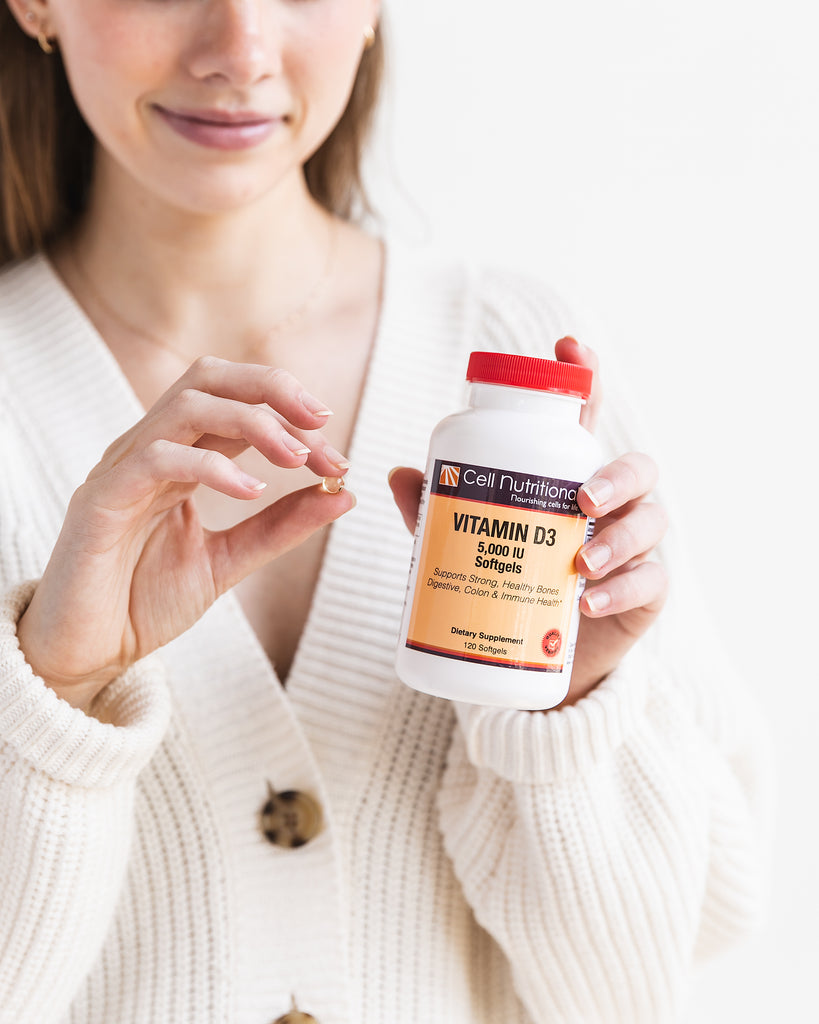
Vitamin D3 (cholecalciferol) -- the active form of vitamin D that we use -- maintains blood levels of calcium by increasing the absorption of calcium from food or supplements.
As background, vitamin D -- also known as the “sunlight vitamin” -- is created when your skin is exposed to sunlight. However, with so many folks avoiding the sun and with aging, your body's manufacture of vitamin D can drop to unhealthy levels.
Interestingly, Canada recognizes the importance of vitamin D in the prevention of osteoporosis in its health claim for foods that contain calcium: "A healthy diet with adequate calcium and vitamin D, and regular physical activity, helps to achieve strong bones and may reduce the risk of osteoporosis". The US version of this osteoporosis health claim does not yet include vitamin D.
Boron is a trace nutrient important for a healthy metabolism, and plays an important role in cell membrane function as well. Specifically, boron helps in the metabolism of calcium, vitamin D, potassium, and magnesium. For calcium in particular, boron reduces urinary loss of calcium.
Boron has also shown in preliminary studies to improve cognitive functions in older people.