
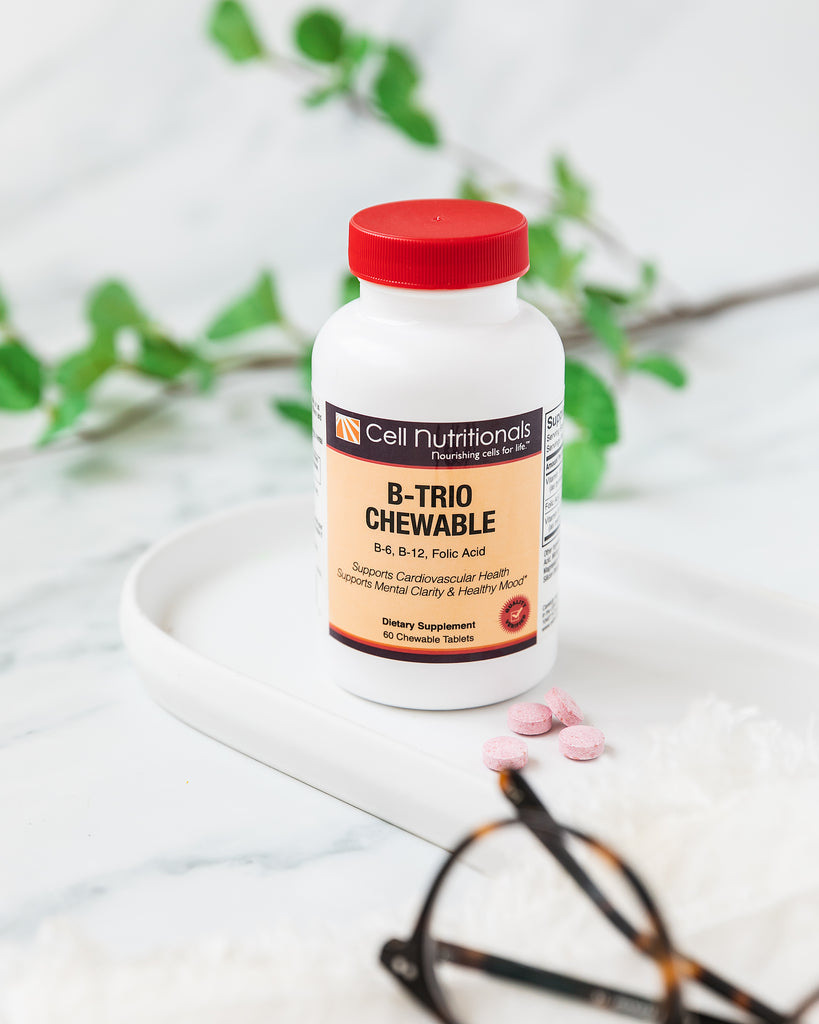
Note: All B-Trio Orders will not ship until February 20th. Thank you!
"Mighty Vitamin B Trio" -- Essential to Cardiovascular Health
Many researchers now agree that insufficient stores of the "mighty vitamin B trio" is strongly associated with a greater risk factor for cardiovascular disease. The combination of folic acid, vitamin B12, and vitamin B6 has been shown to significantly lower homocysteine levels.
A Look at Folic Acid
Only discovered in 1945, folic acid (also known as folate or folacin) is used by the body for intracellular metabolism, DNA synthesis, and conversion of homocysteine to methionine. Folic acid is a member of the B-complex family (B9), and was given its name because it is found in foliage such as dark green leafy vegetables. Other natural sources of folic acid are apricots, avocados, carrots, egg yolks, liver, melons, whole grains, and yeasts. Unfortunately, modern diets tend to be deficient in this essential nutrient, which is why in 1998, U.S. food manufacturers were required to add folic acid fortification to all cold cereal and baking flour products.
Folate deficiency has been linked to mental and functional deterioration in elderly people, and it has been linked to melancholic depression and poor response to antidepressants in the general population. Folic acid is used in conditions commonly associated with folate deficiency, including ulcerative colitis, liver disease, alcoholism, renal dialysis, and drug-induced deficiencies (oral contraceptives, barbituates, etc.).
Vitamin B6 - Pyridoxine
Vitamin B6 is another valuable B-group vitamin, because of the multiple biochemical reactions in which it is involved, including an active role in the immune system and metabolism of amino acids, carbohydrates, and lipids. B6 is found in meat, poultry, fish, eggs, white potatoes, and other starchy vegetables, non-citrus fruits, and fortified cereals and soy products. B6 is found concentrated in muscle mass.
Even marginal deficiencies of B6 may result in immune deficits. Classical signs of B6 deficiency include anemia, seizure activity, seborrheic dermatitis, confusion, and depression.
Supplemental vitamin B6 may be helpful in relieving symptoms some women experience with PMS, and preliminary evidence indicates that it may protect against atherosclerosis, melanoma, and some neurologic conditions. A number of studies associated low levels of vitamin B6 with elevated levels of homocysteine, a risk factor for atherosclerosis, and show that supplemental B6 lowers homocysteine levels.
Vitamin B12 - Methylcobalamin
Based on member demand, we have upgraded the form of B12 in our Sublingual B Trio to methylcobalamin (we formally used cyanocobalamin). Methylcobalamin is a coenzyme form and a more natural form.
While methylcobalamin is active immediately upon absorption, cyanocobalamin must be converted to the coenzyme form first. The rate at which this conversion occurs may be reduced by aging, making one deficient in this essential vitamin.
Vitamin B12 is naturally found in animal products. The richest sources are the liver, brain, and kidney; other sources include egg yolks, clams, oysters, crabs, sardines, salmon, and heart. Lower amounts are in fish, beef, lamb, pork, chicken, cheese, and milk. Plant products are typically devoid of B12 and it is thought that only bacteria manufacture the vitamin. Some fermented plant products, such as tempeh, may have some vitamin B12.
B12 and folate are help convert homocysteines to a heart-healthy element called methionine, which is the precursor of natural SAMe. Decreased brain levels of SAMe may result in disturbances of certain neurotransmitters, leading to depression and cognitive changes.
B12 may also protect against certain types of cancer. Recently, reduced B12 stores have also been identified as a nutritional risk for breast cancer among post-menopausal women.